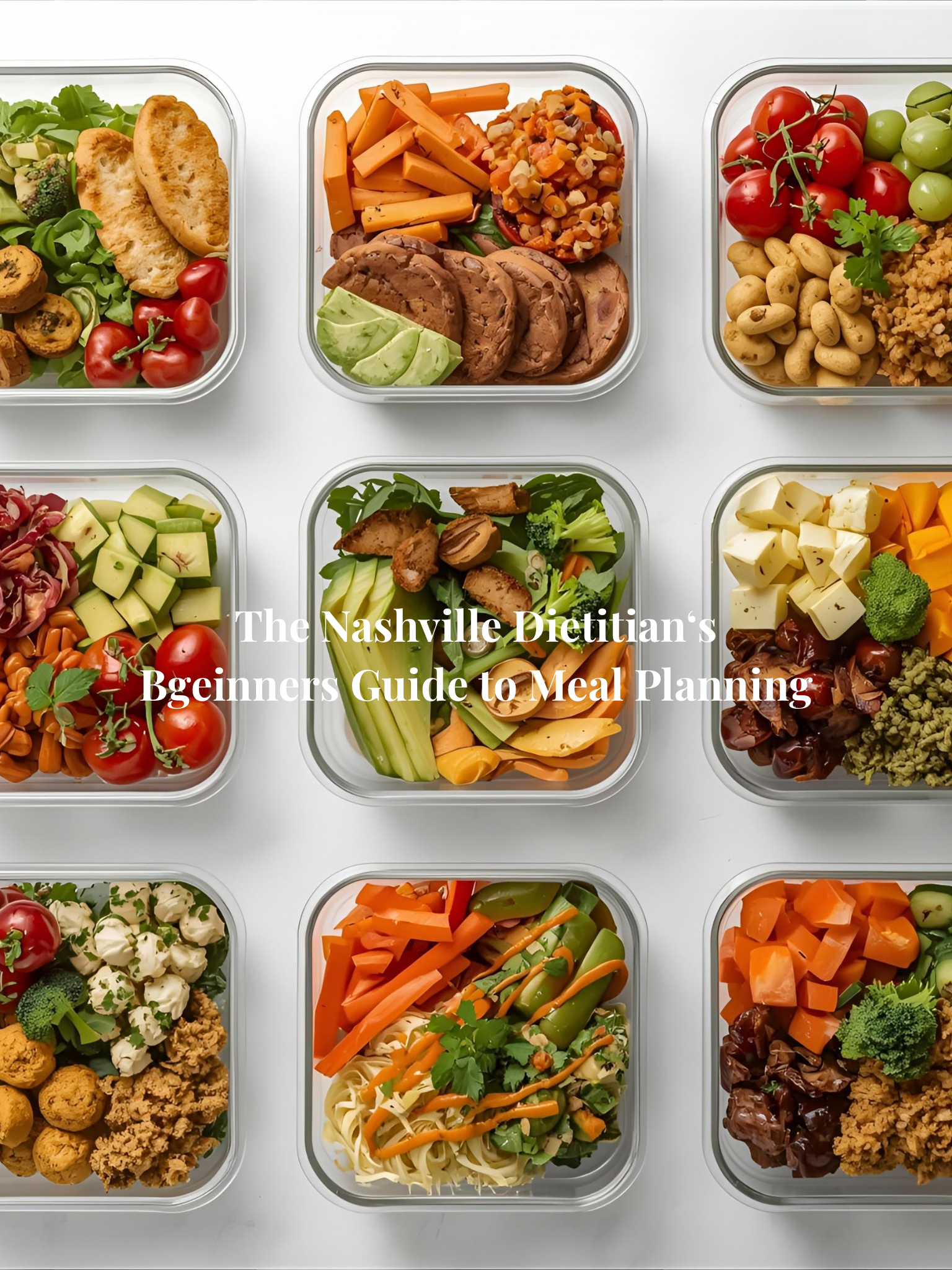
Take the stress out of healthy eating by learning how to meal plan efficiently.
Meal planning isn’t about restriction — it’s about intention. This guide walks you step-by-step through how to create a system that fits your lifestyle, saves you time, and helps you eat nourishing, balanced meals throughout the week.
How to Get Started with Meal Planning
1. Choose Your Planning Day
Set aside 30–60 minutes each week to plan your meals. Many people prefer Sundays, but choose a time when you can focus without rushing.
2. Take Inventory
Before you start searching for recipes, check your fridge, freezer, and pantry. Use what you already have to reduce waste and save money.
3. Find Recipes That Work for You
Look for simple, balanced meals that align with your goals and cooking comfort level.
• Use trusted sources like The Nashville Dietitian, Mediterranean-style cookbooks, or registered dietitian websites.
• Choose 2–3 main dishes and rotate sides for variety.
• Save favorite recipes to a Pinterest board, app, or folder for easy access.
4. Gather the Basics
You don’t need fancy tools to get started — just a few essentials:
• Sharp knife and cutting board
• Measuring cups and spoons
• Non-stick pan or skillet
• Baking sheet
• A few glass or BPA-free storage containers with lids
• Slow cooker, Instant Pot, or rice cooker (optional, but great for convenience)
5. Schedule Prep Time
Block out 1–2 hours once or twice a week to prep ingredients — wash produce, cook grains, marinate proteins, or portion snacks. Treat it like an appointment with your future self.
Meal Planning Tips for Success
• Start Small: Begin with planning 2–3 dinners a week and build from there.
• Batch Cook: Double recipes to freeze or use leftovers for lunches.
• Label Everything: Use masking tape or freezer labels with the date and dish name.
• Keep a “Go-To” List: Save 5–10 easy recipes you know your family loves for busy weeks.
• Use Storage Wisely:
• Store prepped veggies in airtight containers lined with paper towels.
• Keep cooked grains and proteins separate so you can mix and match later.
• Freeze extra portions in single servings for quick grab-and-go meals.
• Stay Flexible: Life happens — build in one “free” night for takeout or leftovers.


Remember…
Meal planning is a skill that gets easier with practice. The goal isn’t perfection — it’s progress. A little planning upfront sets you up for more balanced, less stressful meals all week long.
If you need a little extra help with meal planning, check out my 21 Day Jump Start to the Mediterranean Diet which includes breakfast, lunch, and dinner menus with no repeat meals HERE.